

- Services
Getting to know us
- Industries
Recent case study:
Oracle EBS Cloud Deployment
Consolidating and Migrating assets into Oracle Cloud Infrastructure.
.png?width=250&name=stonewater-logo%20(1).png)
Most Visited Pages
-
- Resources
DSP-Explorer acquires leading Oracle Applications Managed Services Provider, Claremont, to further extend its data management capabilities.

Resources
- Contact us
Oracle APEX and VBCS: Can They Co-Exist?
Contents
In the world of Oracle development, a common debate often arises: Oracle APEX vs. Oracle Visual Builder Cloud Service (VBCS). For years, developers have treated these two as rival siblings fighting for the same piece of the low-code pie.
But as we look at the enterprise landscape in 2026, the question isn’t which one will win, but rather: Can they co-exist? The short answer is yes, and they should. Here is how these two powerhouses stack up and how to choose the right tool for your project.
Understanding the DNA: Differences at a Glance
The primary difference between APEX and VBCS boils down to "Data Gravity”: where does your data live, and how do you want to talk to it?
| Oracle APEX | Oracle VBCS | |
| Architecture | Database-Centric. It lives inside the Oracle Database. | REST-Centric. A standalone service that consumes APIs. |
| Primary Language | SQL & PL/SQL. | JavaScript (based on Oracle JET), HTML5, and CSS. |
| Best For | Massive data processing and complex reporting. | SaaS extensions and modern mobile-first web apps. |
| Licensing | Included with the Oracle Database (no extra cost). | Licensed via Universal Credits (PaaS). |
| Deployment | Anywhere an Oracle DB runs (On-prem, Cloud, Hybrid). | Primarily Oracle Cloud Infrastructure (OCI). |
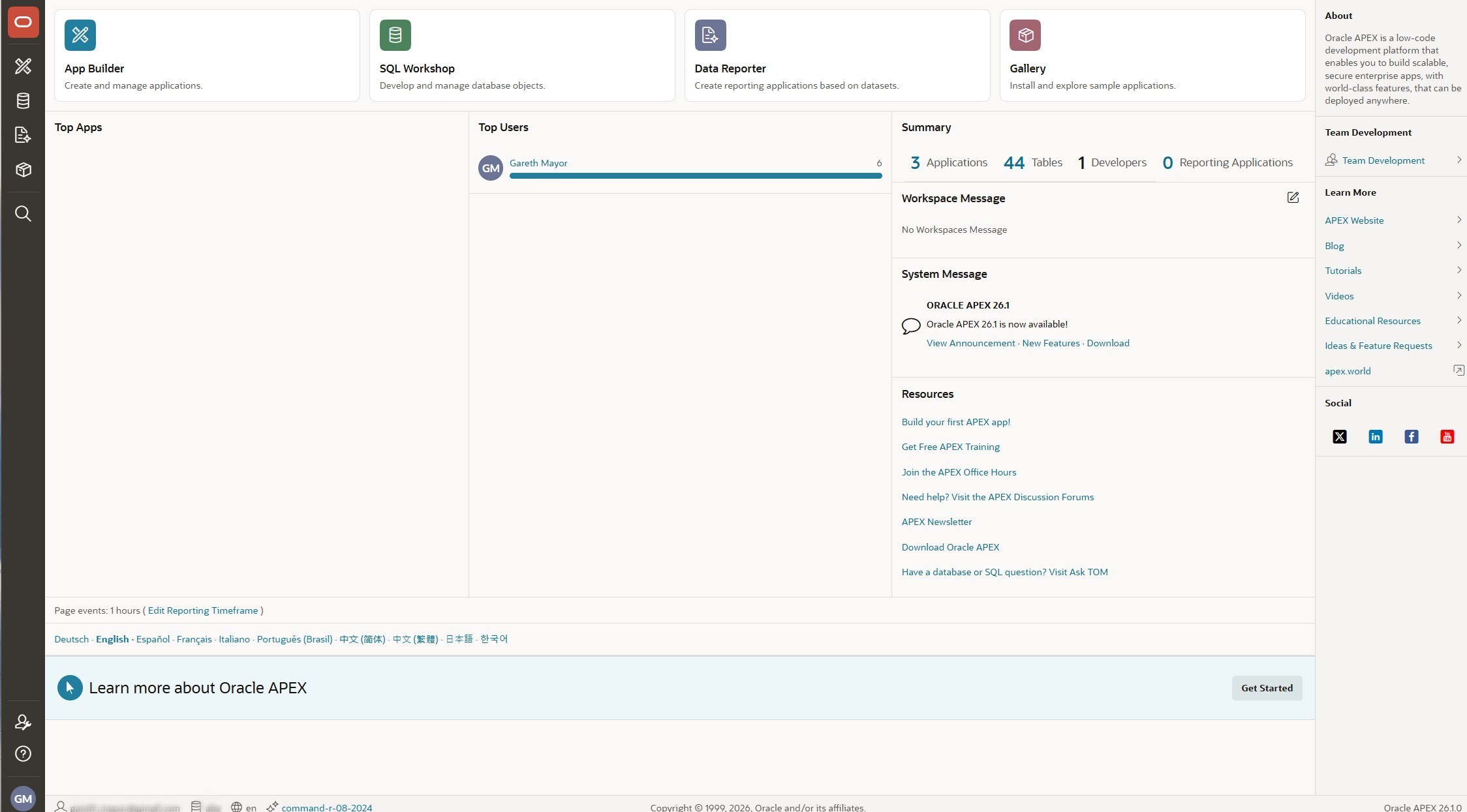
Oracle APEX: The Data Powerhouse
APEX is the undisputed king of data-driven applications. Because it resides within the database, it can process millions of rows of data with zero latency. If you are building a custom ERP, a complex warehouse management system, or migrating legacy Oracle Forms, APEX is your best friend.
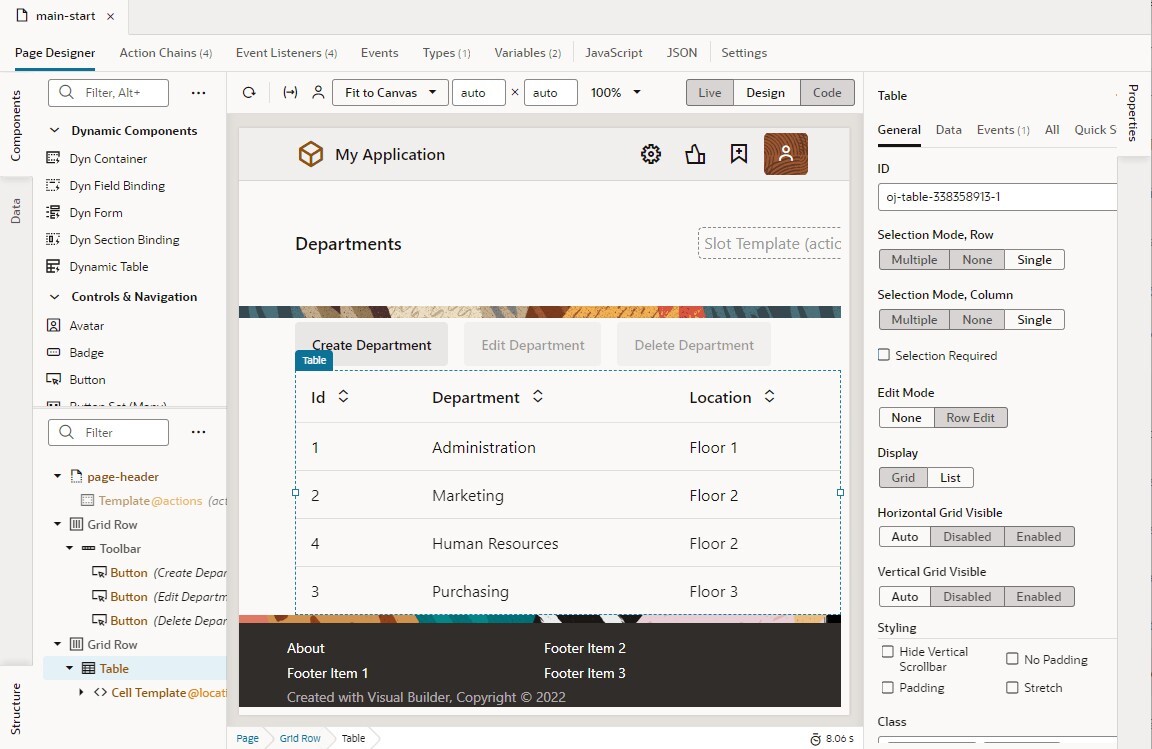
Oracle VBCS: The SaaS Extender
VBCS is built for the modern web. It’s the native tool for Oracle’s "Redwood" design system. If you need to build an extension for Oracle Fusion Cloud (HCM, ERP, or CX) that looks and feels exactly like the native UI, VBCS is the right choice. It handles REST APIs and identity propagation (SSO) with the Oracle ecosystem out of the box.
The Decision Matrix: When to Choose Which?
When to choose Oracle APEX
Expanding on the use cases for Oracle APEX helps clarify why it remains a favourite for developers who want to stay "close to the data." Here is a deeper dive into those specific scenarios:
1. Data is Heavy: High-Volume Processing
When your application needs to handle millions of rows of data, perform complex calculations or generate massive datasets, APEX has a distinct advantage.
-
The "No-Network" Benefit: In most architectures, data must travel from the database to a middle-tier application server to be processed. In APEX, the application is the database.
-
Zero Latency: Complex SQL queries and PL/SQL logic execute exactly where the data lives. This eliminates the "network hop" latency, making tasks like end-of-month financial reconciliations or real-time inventory adjustments significantly faster than in REST-based frameworks.
2. Legacy Migration: The Modern Successor to Forms
For decades, Oracle Forms was the standard for building data-entry applications. APEX is the natural successor for teams looking to modernise.
-
Shared Skillsets: If your team knows SQL and PL/SQL, the learning curve for APEX is remarkably shallow. You are using the same business logic you’ve used for years.
-
Modernising without Rewriting: You can often reuse existing database packages, triggers, and procedures. This allows you to build a modern, web-based UI on top of proven logic, rather than starting from scratch with a completely different tech stack.
3. Cost is a Factor: The "No-Cost" Feature
From a purely financial perspective, APEX is often the most logical choice for organisations already invested in Oracle.
-
Fully Included: APEX is a standard feature of the Oracle Database. If you have a license for the database (On-prem, SE2, EE) or are using an Autonomous Database in the cloud, you already own APEX.
-
No Per-User Fees: Unlike many low-code platforms that charge "per seat" or "per app," APEX allows you to scale to thousands of users without increasing your licensing costs. This makes it ideal for internal tools where you want to provide access to every employee without a ballooning budget.
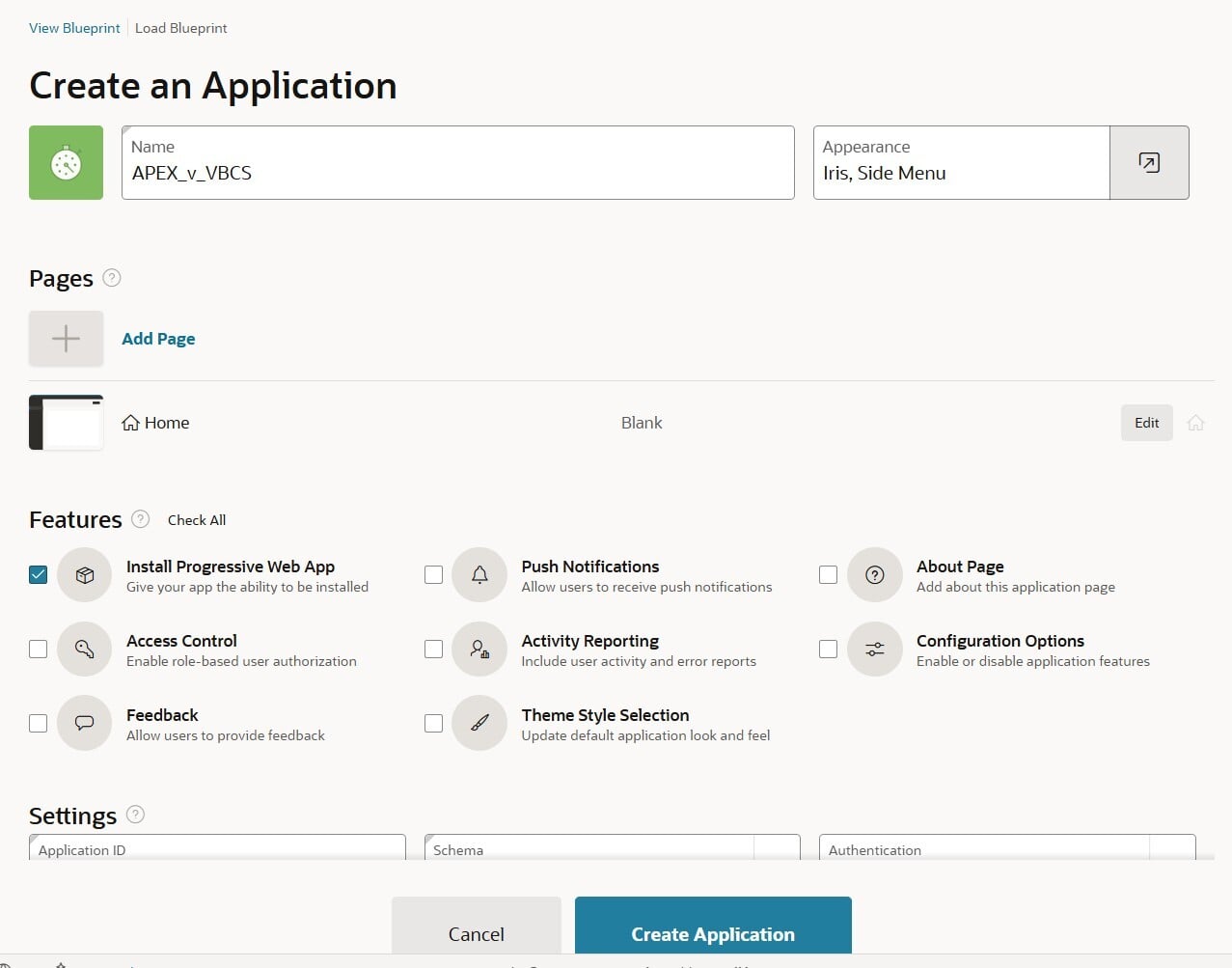
4. Offline/PWA: Robust Productivity on the Go
APEX has made significant strides in Progressive Web App (PWA) capabilities, which is a game-changer for field workers or warehouse staff.
-
Installability: You can "install" an APEX app on a mobile device directly from the browser, bypassing the need for App Store or Play Store approvals.
-
Offline Functionality: APEX PWAs can be configured to cache static files and even handle some data synchronisation. While VBCS also supports mobile, APEX’s PWA features are incredibly easy to toggle on, making it perfect for internal productivity apps where you need a mobile presence quickly and reliably.
APEX Summary
To summarise, choose APEX when the data is the star of the show. If your primary goal is to manipulate, report on, and manage an Oracle Database with high efficiency and low cost, APEX is designed specifically for that mission.
When to choose VBCS
While APEX is the king of the database, Oracle Visual Builder Cloud Service (VBCS) is the architect of the modern, connected enterprise. It isn't just a "light" version of APEX; it’s a completely different tool built for the API-driven world.
Here is a deeper look at when and why you should choose VBCS:
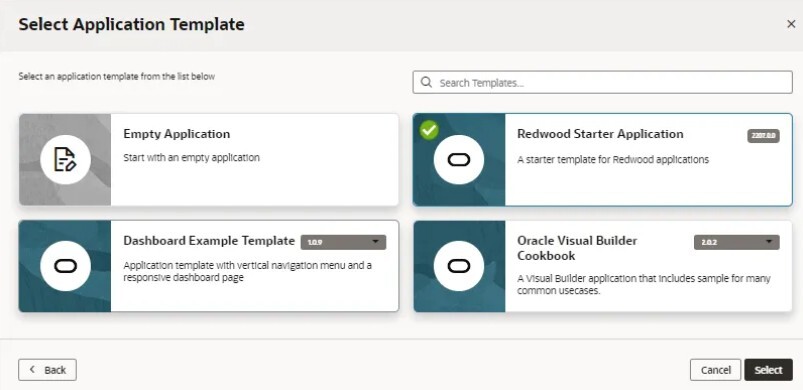
1. SaaS Extensions: The Native "Redwood" Experience
If your organisation solely uses Oracle Fusion Cloud (ERP, HCM, or CX) with no separate database, VBCS is the only logical choice for building extensions.
-
Visual Consistency: VBCS is the native home of the Redwood Design System. This means any page you build will look, feel, and behave exactly like the rest of your Oracle Cloud environment. Users won't even realise they’ve left the core application.
-
The "App UI" Paradigm: Unlike APEX, which is a standalone application, VBCS allows you to build "App UIs" that plug directly into the Oracle Cloud Console. It provides seamless navigation and identity sharing that is difficult to replicate elsewhere.
2. JavaScript Expertise: A Modern Web Stack
VBCS is built on Oracle JET (JavaScript Extension Toolkit), which follows industry standards such as HTML5, CSS, and JavaScript.
-
Developer Comfort: For a modern front-end developer, VBCS feels familiar. It uses a component-based architecture similar to React or Vue. If your team consists of web developers rather than PL/SQL experts, they will be productive in VBCS much faster.
-
Client-Side Logic: Because the logic runs in the browser (client-side) rather than the database (server-side), you can create highly interactive, snappy user interfaces that don't require a page refresh for every small action.
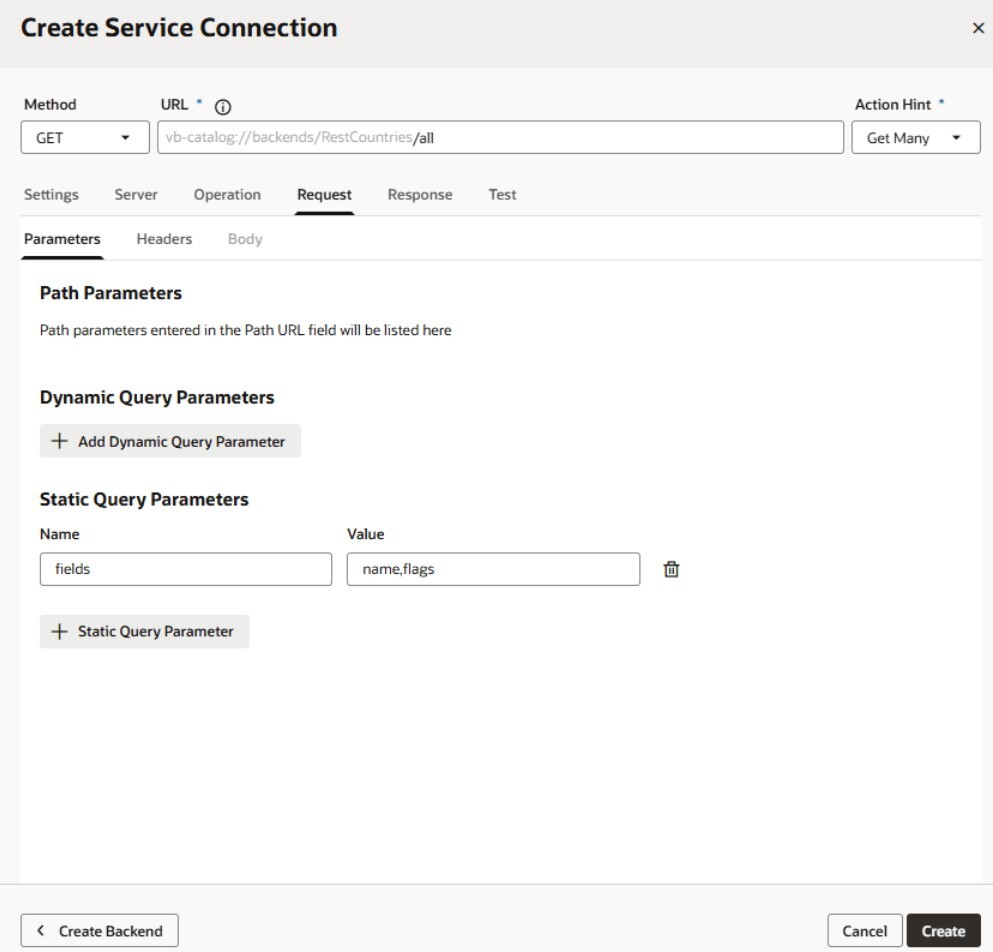
3. API-First: Living Outside the Database
In 2026, many applications don't own their data; they just borrow it from other services. VBCS is designed for this REST-centric world.
-
Easy Integration: VBCS has a built-in Service Catalogue that makes connecting to Oracle SaaS APIs or external REST services (like Stripe, Twilio, or AWS) as simple as a few clicks. It handles the authentication (OAuth) and data mapping automatically.
-
No Local Database Required: Unlike APEX, which needs an Oracle Database to function, VBCS can exist entirely on its own, pulling data from various cloud sources and stitching them together into a single unified interface.
4. Mobile-First Design: High-Fidelity Experiences
While APEX is great for responsive web apps, VBCS is superior for Mobile-First development where the user experience must be polished and specific.
-
Visual Designer: VBCS provides a sophisticated drag-and-drop canvas that gives you pixel-perfect control over your layout. This is crucial when building consumer-facing apps or executive dashboards where branding and theming are top priorities.
-
Native Device Features: VBCS makes it easier to tap into native mobile features, like the camera, GPS, or file system, via standard Apache Cordova or Capacitor plugins, ensuring a more native feel for mobile users.
VBCS Summary
To put it simply, choose VBCS when the user experience and external connectivity are your top priorities. If you need to integrate with multiple cloud services and present that data in a beautiful, modern interface that matches the Oracle Cloud ecosystem, VBCS is your specialised tool.
Can They Co-Exist?
Absolutely.
In a mature enterprise architecture, you shouldn't choose one over the other for the entire company; you should choose the right tool for the specific use case.
Many modern organisations use APEX for their internal back-office operations and heavy data management, while using VBCS for their external-facing customer portals or SaaS-integrated dashboards.
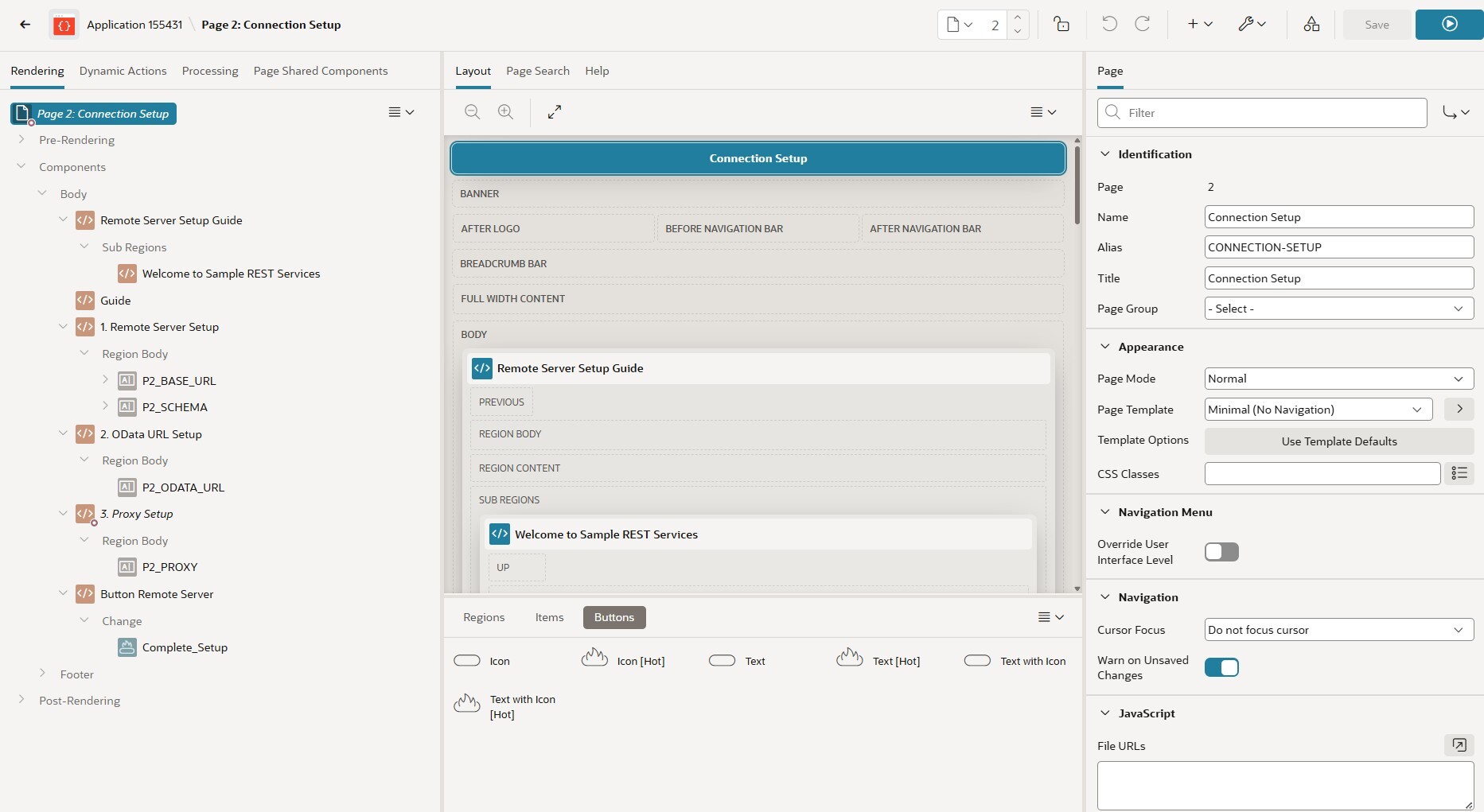
However, the goal isn't just to have both tools in your belt; it’s to have them working together on the same project. It’s possible to use both APEX and VBCS in a single application, called a Hybrid Low-Code Architecture. Here is how you can make it happen:
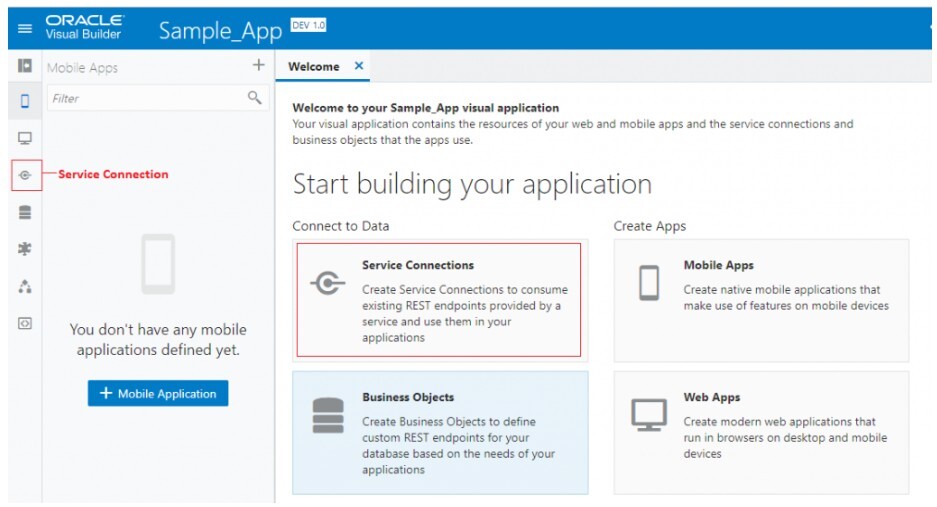
1. The Bridge: Oracle REST Data Services (ORDS)
The most common way to combine these two is by using APEX to expose the data and VBCS to consume it.
-
APEX as the API Engine: You use APEX and ORDS to turn complex database tables, views, and PL/SQL logic into clean, secure REST endpoints.

-
VBCS as the UI Layer: VBCS then calls those endpoints. This gives you the best of both worlds: APEX’s raw data-processing speed and VBCS’s high-fidelity Redwood UI.
2. The "Side-by-Side" Strategy
Sometimes, an application has two very different sets of users.
-
Internal Power Users: Use APEX to build a back-office administration panel where staff can run massive data imports, complex reports, and bulk updates.
-
External Customers/SaaS Users: Use VBCS to build the front-facing portal. Since VBCS handles SaaS identity propagation and Redwood styling better, customers get a sleek, modern experience that matches the rest of the Oracle Cloud.
-
The Connection: Both apps point to the same Oracle Database, ensuring data integrity across the entire project.
3. Embedding: The iFrame Approach
While it’s a bit old school, you can actually embed an APEX page directly inside a VBCS application (or vice versa) using an iFrame.
-
When to use this: If you have a specific, highly complex interactive chart or data grid already built in APEX (for example, an Interactive Grid) and you don't want to rebuild that logic in VBCS, you can simply embed that specific APEX page into your VBCS layout.
-
The Catch: You have to be careful with Single Sign-On (SSO). You’ll want to ensure that once a user logs into the VBCS app, they are automatically authenticated for the embedded APEX content, so they don't see a second login screen.
Why would you bother using both?
Using both allows you to optimise for speed and cost. You use APEX for the heavy lifting, where it’s free and fast and use VBCS only for the specific parts that require a Redwood look or SaaS integration, where it’s most valuable.
By combining them, you aren't just building an app; you’re building a scalable ecosystem.
Conclusion
Who Has the Better Future?
It’s tempting to pick a winner, but the reality is that both have bright, distinct futures. Oracle is increasingly sharing components between the two. APEX is using more Oracle JET (the engine behind VBCS), and VBCS is getting better at talking to Oracle Databases.
-
APEX has the weight of the Oracle Database behind it. While there is data in Oracle Databases, APEX is the fastest way to turn that data into an app. Its community is massive, and its recent pivot toward AI-assisted development (Generative AI for SQL) has made it more relevant than ever. And with the latest release of 26.1 with APEXlang, that future is looking even more relevant.
-
VBCS is the future of Oracle’s UI. Since Oracle is building all its own Fusion Apps using VBCS and Redwood, the tool is guaranteed to receive top-tier support and evolution. It is the "official" face of Oracle Cloud.
The Verdict
If you want to be a versatile developer in the Oracle ecosystem, don't choose and learn both. APEX is your Back-end/Data powerhouse, and VBCS is your Front-end/SaaS specialist. Together, they form an unbeatable toolkit for any Oracle application developer.
For more information, check out our Oracle APEX Services, or contact us today, and one of our expert developers will be in touch.